Participatory Body Mapping of Postpartum stories with Latinx mothers
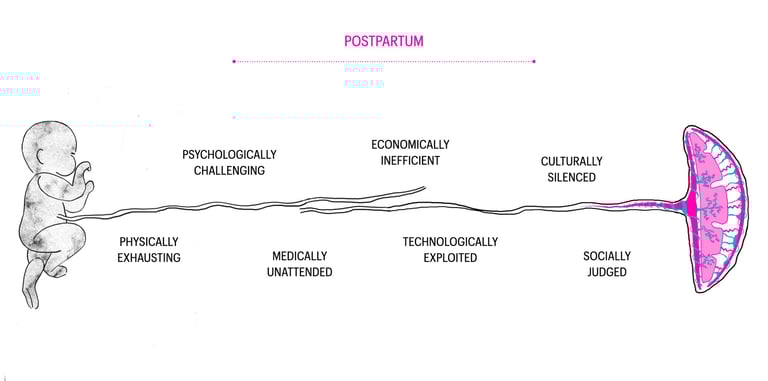
Postpartum bodies are invisible. They are not portrayed in the movies, shown in popular culture, not even present in prenatal or postnatal education. Indeed, what we see in the media is the unrealistic standard of postpartum bodies that need to "go back to normal" as soon a possible.
In collaboration with ALAS in Texas, and with the funding support of the Engagement Scholarship Consortium Research/Creative Activities Grant Program 2024, we designed an intervention that deploys participatory body mapping in the context of postpartum care with Latina moms. The project aims to create body representations that tell multiple perspectives about the forces that drive traumatic perinatal experiences, specifically in the context of migration. The project also offers a methodological expansion by positioning body mapping, not only as a qualitative research tool, but as a tool for strengthening communities, resignifying stories and life experiences, and as a framework for the inclusion of mind-body pedagogies.
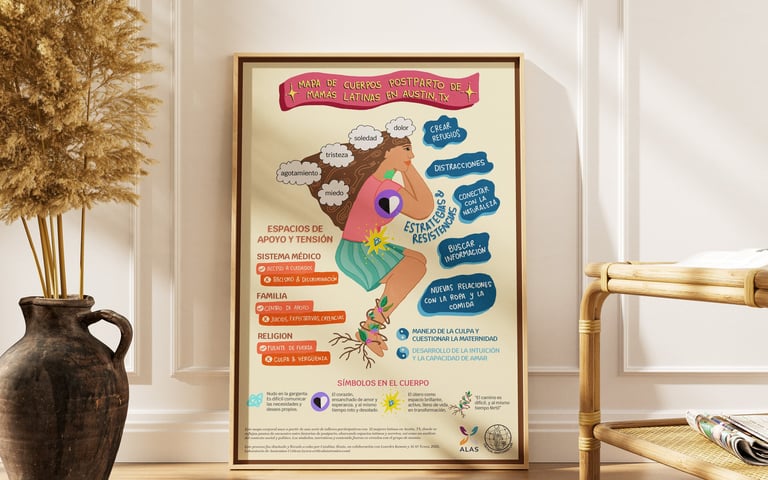
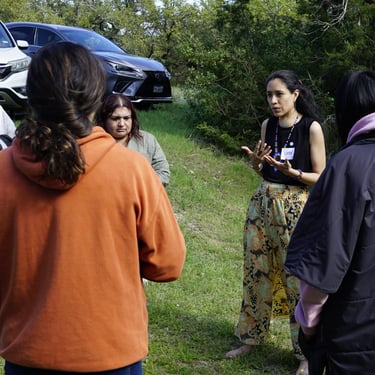
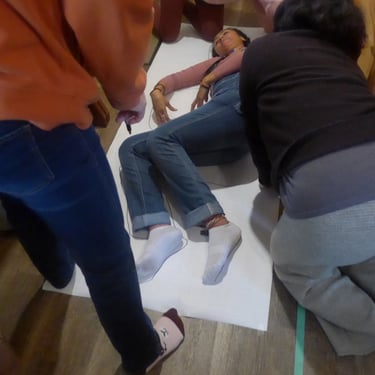
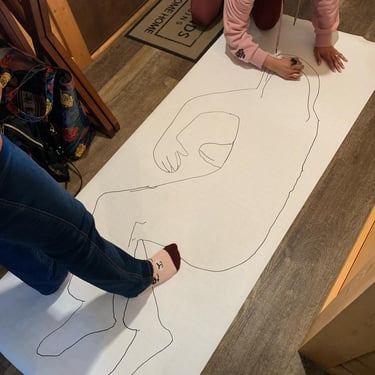
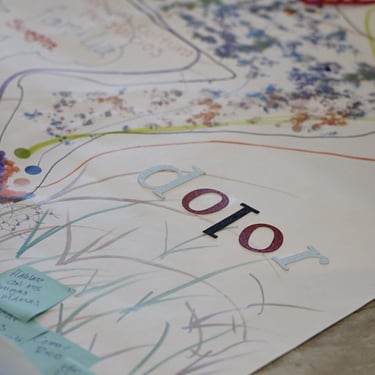
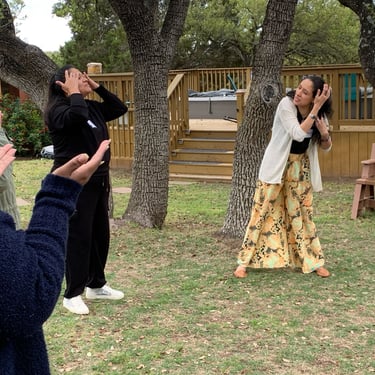
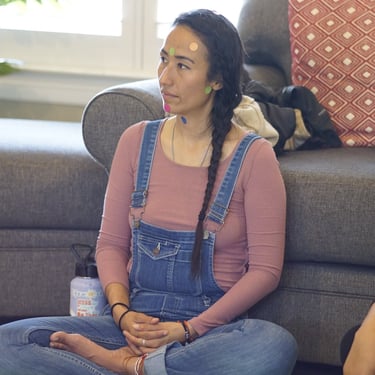
Through a series of online and in-person workshops, a group of Latina moms developed representations of their postpartum experiences using body maps, linking physical symptoms to structural, social and economic realities. We then identified strategies and resistances used by the mothers to make sense of postpartum, and traced body meridians that connected their struggles with those of other women in the room. We deployed various sensible pedagogies in this project, generated knowledge through conversation, recounting memories, analysis, and body exercises. We strengthened a community of support, where body maps and images enabled reflection and transformation.
This project contributes to multiple audiences. On one hand, the project demonstrates a model for shaping support mechanisms for Latinx communities, who have been historically undersupported by social and medical systems. In addition, by framing health beyond medical terms, the project generates cross-disciplinary insights, and informs multi-sector collaborations to serve the needs of this population, while advancing important scholarship in participatory methods, public health and design.
Products derived from this project include the body map (see below) currently mobilized as a tool for advocacy, a project report (link below), and a short documentary video. As part of academic dissemination, this work was presented in the Engagement Scholarship Consortium International Conference in Roanoke, VA in October 2025.

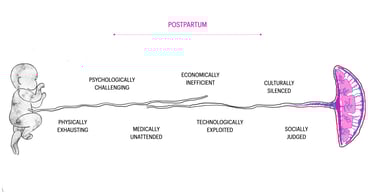
Framework
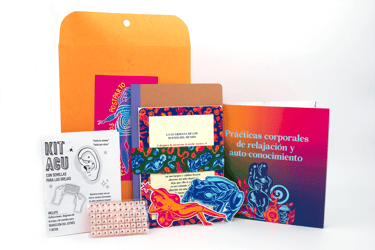
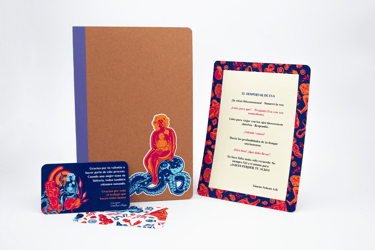
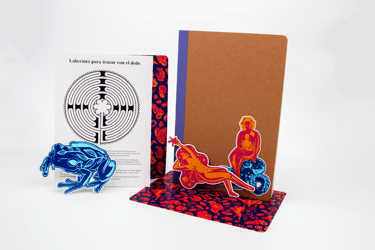
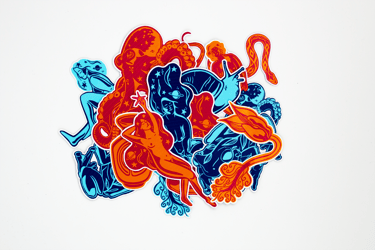
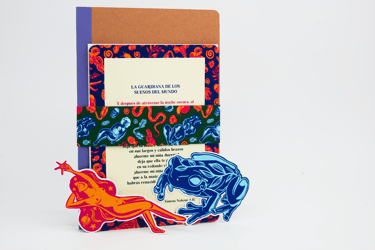
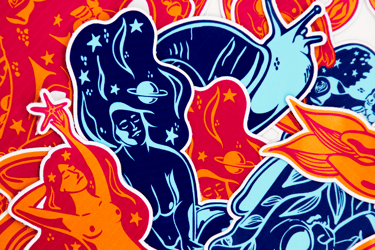
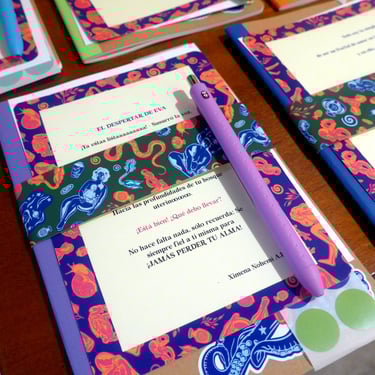
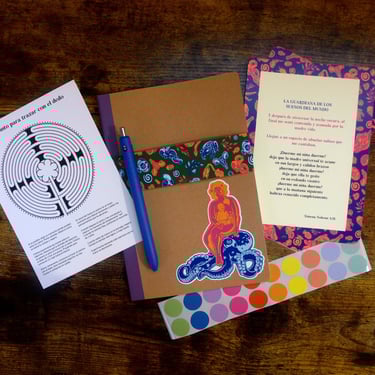
Visual identity and care kits
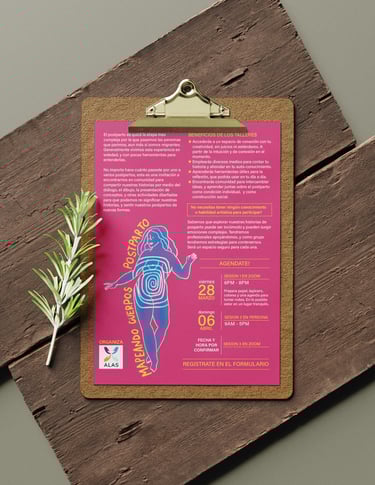
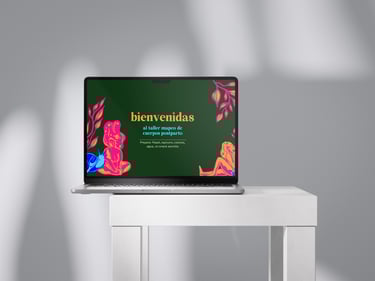
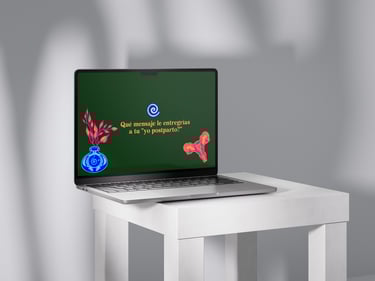
Recruitment and online facilitation materials
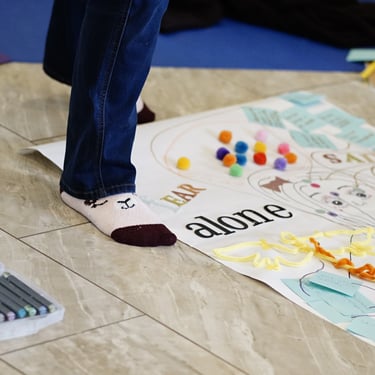
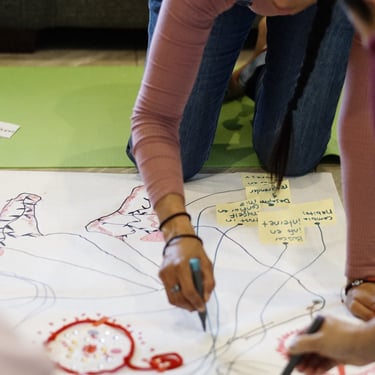
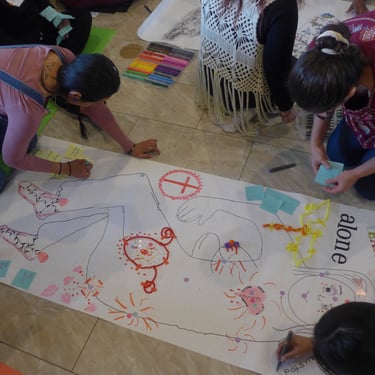
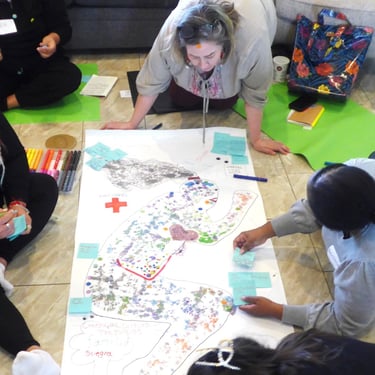

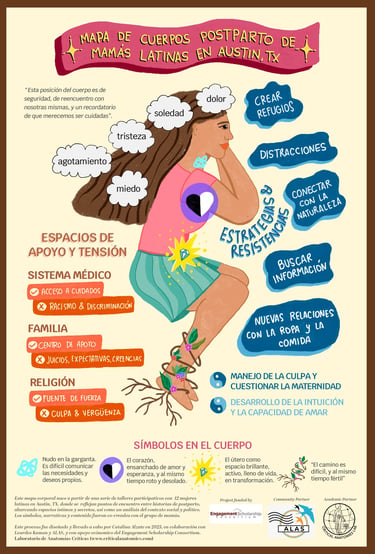
Participatory body map